A sudden trip to Singapore meant that I went as far East as I have ever been in my life.
Singapore is more than meets the eye from a double-decker tourist bus. It all started when the customs official checking our passports had a bowl of sweets on his counter, a sign that this place takes customer-friendliness to a hew height. It's all very melting-pot here, four languages, five religions, six ethnicities. Like Dubai with history.
And some history there is: Raffles put the place on the map, of course in the cause of British Empire and for the profit of the British India Company. But in short order all sorts of people arrived, and the town was ordered into areas called Chinatown, Little India and Arab Street. Today the government has a clear policy of mixing in order to avoid the development of ghettos, so the public housing are the places where everyone lives together.
There is still a taste of each culture to be had in those old quarters, Little India with its tiny shops and large covered market selling fish, meat, veg and all sorts; Arab streets with single-sexed schools and mosques at every corner, like Fujeirah-lite. Chinatown is where it's at, though, where you can buy personalised stamps in the market and have your name written in Chinese calligraphy and colourful illustrations, where silk shirts are cheap and cheerful and the old men play chequers in the square.

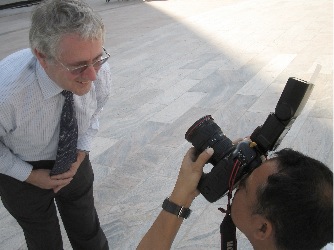 Stuart giving his all to the camera

 http://www.wildlifesafari.info/hyrax_rock.html
Exhibit A: On the Island of Sentosa, a favourite leisure location just off the main coast
http://www.wildlifesafari.info/hyrax_rock.html http://www.wildlifesafari.info/hyrax_rock.html
http://www.wildlifesafari.info/hyrax_rock.html
Exhibit A: On the Island of Sentosa, a favourite leisure location just off the main coast
http://www.wildlifesafari.info/hyrax_rock.html http://www.wildlifesafari.info/hyrax_rock.html
 http://www.wildlifesafari.info/hyrax_rock.html
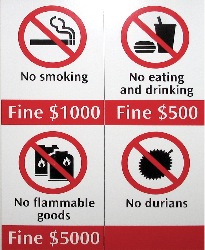
Exhibit B: On the Underground trains. Note the prohibition on the bottom right of the sign. For an explanation, see here
http://www.wildlifesafari.info/hyrax_rock.html
Exhibit B: On the Underground trains. Note the prohibition on the bottom right of the sign. For an explanation, see here

