Showing posts with label animals. Show all posts

07 November 2012

Hyde Park


A wash of cloud has been gathering all day.
Occasionally the sun elbows its way through their bulk, shimmering the yellow-leaved trees, sparkling the lake surface. By now the grey has dimmed the afternoon, reflecting in the water, matching the pales of swans, ducks and herons. It's late afternoon, the park is populated with joggers in fluorescent jackets, Arab families - black-wrapped women, baseball-capped guys and fidgety children feeding the ducks. Gulls and pigeons vie for scraps of bread, teenage cygnets aiming for dignity while bullying their ungainly bodies through the flittery birds.
Hyde Park has been the centre of our world this summer. We walked here, watched the Olympics here, cycled Barclay's bikes criss-cross on our way to the West End or the V&A. Catching art, as ephemeral as the Serpentine pavilion and as permanent as the Peter Pan sculpture, we discovered new corners, made connections along new paths, tested every cafe, every tea stand, every snack hut. It's not been much of a summer, but there have been enough sunny days to make the exorbitant rent that puts us near the park, worthwhile.


06 December 2009

Views from the road - pedestrian edition

IMG_6167.jpg

The view from the roof terrace includes the herd of sheep living in the ruined plot below us.


DSC00146.JPG

Two kinds of people you can depend on for constant hassle as you walk down the street: The caleche driver who will take you anywhere for 5 pounds and the fellucca captain with a good price.


DSC00198.JPG

The souq is split between selling glittery things for tourists and useful stuff, like these huge foul bowls for the locals.


DSC04311.JPG

We are close to the beginning of the high season in Egypt and many cruise boats are anchored here to be refitted and cleaned up before they go back to Luxor for the winter rush.

DSC00005.JPG

More random specialisation of Egyptian shops. This one concentrates on blenders and sewing machines, presumably on the premise that it doesn’t matter why things whirr round, as long as they do.

20 November 2009

People We Meet Part 3: The Overland Tourists

iphone Maun to Kasane - 0002

We call their tents pimples. They usually show up late and leave very early, and they make such noise that they wake every honest sleeping camper. They travel from Nairobi to Cape Town in 6 weeks and stop to take group photos at the equator. Their big trucks are orange, but manly with huge wheels and customised storage for kitchen equipment and tents. They are the overland trucks, carting the gap year youth of the Western world through the wilds of Africa. In the evenings the girls congregate in the toilets for make up sessions and the boys strut their stuff in their low hanging boxers, just like preparations at home for the Friday night clubbing experience. I wonder what these people carry in their luggage, because we certainly don’t have space for more than one decent outfit per person. At Guma lagoon they used all the hot water, and in the Mara we found ourselves listening to complaints about the shortness of the toilet breaks during the trip. At Track and Trail camp in Zambia a catastrophe was narrowly averted when a group of American youths cornered a passing elephant to take photos and refused to take the mock-charging and flapping ears seriously. A local ranger told them they could stay and eventually be trampled or slowly back away and show some more respect for the wild life.

Occasionally we meet groups of more mature travellers, a sign that overland trucking has become a more acceptable form of holiday travel. In Botswana we encountered the Rolling Hotel (above) which was novel in that the tourists didn’t have to put up their own tents, but slipped into a Japanese hotel style cubicle in the truck itself, a claustrophobic experience, I imagine, but it does keep you away from mosquitos and creepy crawlies.

Luckily they move on fast, so when they descend on us at a camp site or resort, we just have to stay put and they will be gone again. Now that we have reached the countries considered more volatile we have left these types of organised tours behind.

12 October 2009

Uganda Roundup


Bwindi Bird Walk - 09

When we worked out our route we had planned to travel from Tanzania North to Rwanda and Uganda, looping round Lake Victoria to enter Kenya from the west, but problems with the suspension prevented us from doing this. Instead we spent a few days in Kenya, heading up to the Lake and Uganda for a slow meandering arc returning us back to Nairobi after a couple of weeks. The result was that travelling in Uganda felt a bit aimless, being without a northward goal. The place still managed to get into my new top 3 country list (with Malawi and Namibia), for the amazing rain forest, the chilled people and the very funky monkeys (red-tailed, blue-tailed and black and white Colobus). We had no trouble to speak of, despite ongoing problems in the DRC next door and recent riots in Kampala related to changes in government.


DSC08054.JPG

Uganda also provided us with two new top ten campsites, a fab birthday treat for me and the fulfillment of one of Stuart's life ambitions, to see the mountain gorillas. We started to call Uganda the land of surprises, as it was so different from our expectations, and just when we thought we had worked out what kind of place it was, a new and unexpected vista opened in front of us.


Mpenga Forest Reserve - 14

Uganda was hills after hills after hills of green fertile farms, growing bananas, coffee, plantain and potatoes all mixed up together; it was riding our horses through the sugar cane fields and saying Jambo to every single child along the way, including stopping business at the local primary school; it was the perfect camp site and the wettest, a fabulous lake location where we got stuck due to the beauty and great company for far too long; it was also the frustration with badly-maintained sites that had so much going for them if someone just bloody well fixed the plumbing!; it was our first encounter with real rain forest, a green and dense mass of leaves, mushrooms and monkeys, being chased by the most evil mosquitos, struggling for air in the damp, cloying, hot, wet air; it was intense downpours which broke our awning and my patience, giving us clammy clothes and shoes for days and a great excuse for watching movies for a few days.


Mpenga to Ruhanga Uganda Lodge - 018

And then, after we decided that Uganda was pretty much a big lake and a lot of forest, we arrived at Queen Elizabeth National Park and discovered the Western Rift Valley, with its volcanos and crater lakes, great big hollows where we could watch elephants crossing the high grass way below us, where herds of Topi grazed among Uganda Kob, where water buffalo wallowed in grey damp patches until the layer of mud cracked off their hide, where pools of blue water shimmered against the salty edge separating wet from green, where we could see the next rain storm coming from an hour away across the acacia plains, a grey mass swallowing up the ground and the horizon.


Lake Bunyoni - 09

Either we are getting more sociable or Uganda just has more interesting people, but we made some real cool new friends: a particularly good source was the Rwenzori guesthouse in Fort Portal, where we chatted with Donna the gorilla marketing lady from VSO, an auditor working on anti-corruption campaigns for USAid, some chimp researchers, an Israeli couple on holiday who entertained us with their horror story of getting Malaria on the second day of their trip, and the host himself, an opinionated Brit with fourteen years in Uganda and he was not holding back. We learnt a lot. Mustn't forget to mention the other overlanders, Trev and Jan, Anja and Jörg and Ben and Kate, fantastic company and deep wells of information, GPS tracks and ripped DVDs.


Lake Bunyoni to Bwindi - 01

07 October 2009

Pictures from the road

Literary bend or political comment?

DSC07729.JPG

The Ankole of Uganda breed cows for the size of their horns and have 100 different names for the colour of their cows' skin. They don't raise cattle for dairy or meat, but for social status, and cattle are the currency attached to the bride price, a hot topic in Uganda today (there was a whole page article about the formalities of bride price in the paper last weekend). Unfortunately this little obsession results in overgrazing and soil erosion. Nowadays there are efforts to interbreed the Ankole cows to make them yield more milk so that they have some practical use.

DSC08131.JPG

I wonder how often people who have checked in actually check out again. Very Hotel California.

DSC07846.JPG

The Ugandan border town of Busia is obsessed with uniforming the border staff. The colour scheme is cool. Money changers wear yellow jackets on the Ugandan and purple jackets on the Kenyan side, and the bicycle taxi drivers (?riders?) wear a fetching shade of pink. Fab.

DSC07872.JPG

19 September 2009

Look at these!

Stuart took some incredible photos in the Maasai Mara. Take a look: http://www.flickr.com/photos/fiverlocker/tags/kenya/

14 September 2009

Doing the Maasai Mara crush


Kenya = Maasai Mara, the famous game reserve that spans the border to Tanzania where it is called the Serengeti. Full of animals and home to the Mara river crossing featured in countless wildlife documentaries, where thousands of wildebeest and zebra throw themselves across the river trying to evade the waiting crocs and lions. Land of empty open plains swaying with grass, the odd tree decoratively breaking the endless horizon, where vast herds of exotic animals graze, from zebra to impala, gazelles of every variety alongside elephant and giraffe, eland, reed bucks, topi and kongoni; where predators roam looking for easy pickings, lions, leopards, cheetah, hyena and fox, a place to go at least once, although it would be hard to think we will never return.


I had heard many stories before we came, had a picture in my mind of how it would be, and it all turned out exactly like that and at the same time completely different. Access to the park is unlike any other we had been to, the road up to the first gate was terrible and only got worse as we pushed on to Aruba Bush Camp, whose owner, a Bavarian lady, we had met at Jungle Junction in Nairobi, and who promised hot showers and clean toilets at her camp site. Due to the bad infrastructure, the lack of signage and bad tracks in the park we had been told to take a guide, so Daniel, a local Maasai, hopped in the car with us in the morning. This turned out to be an advantage as well as a drawback. Daniel knew the roads, so he took us into the park through a shortcut. He was also on the phone a lot, for reasons of navigation, it turned out, as the mobile was the communicator for those guides not belonging to a lodge (their cars are equipped with two way radios). So in order to find out where the game was he called and was called, and he promptly took us to a spot where we could see a cheetah. A cheetah, wow! These guys (or often gals, as the females are extremely territorial and keep all males out of the way) are pretty hard to spot, as they are very shy and spend most of the day in hiding. But there it was, all lean and elegant, if panting a little from the heat, a real live cheetah in the wild.


Unfortunately that was also our introduction to how things work in the Mara and the drawback of having a guide in the car with us. There were three other safari cars around, each of them nudging in to see the cheetah better, taking turns to close in, overtaking and cutting each other off, in the process pushing the animal to move on just as it had found a shady spot to rest. It was looking increasingly harassed and when we told Daniel that we didn't want to approach any further he looked at us, mystified, and carried on encouraging us to go even closer. It took some will to refuse, but we could as we were driving ourselves. A side effect of all this jostling was that all the cars went off the main track, crunching over the vegetation and churning up the dry soil. It hasn't rained here yet, the Mara is the driest it has been since the 50's so the environment is very fragile, and I was shocked to see that all through the day not only did big 4x4 Landrovers and Cruisers drive on the lesser used tracks, which cut across the plain all over the place, but in the search for a better view they would drive into thickets, reverse over shrubs and pull up right on the river bank, making new tyre marks that would then be used by other cars. Part of the problem is of course that there is no established road system in the Mara such as we are used to from other parks, whether that be Kruger or Etosha or South Luangwa. Even when the signage was bad, there were always clear road markings and offroad tracks were blocked by stones and Do Not enter signs. there is nothing of the kind here, and I have yet to even see a map of recommended routes.


Another problem are the tourists who push the guides to drive ever nearer to the animals, and since most guides are dependent on the tourists' goodwill and their tips, they are happy to oblige. I felt that Daniel considered this just the way things are and since there is no penalty for bad behaviour and no immediate impact he is happy to carry on and satisfy the tourist wishes. Of course there is a long term impact on the environment and - through stress - on the animals. I wonder if the guides were paid a wage, or if they got ranger training so that they could gain an understanding of the impact of their actions combined with the confidence to be guardians of the landscape rather than collectors of tips, if better infrastructure and more policing of visitor behaviour would help here. I am sure many people have already thought of solutions to the problem, but it's sad to see that not a lot seems to get implemented.


Our stop to watch the river crossing became another ambivalent event. The Mara river had slowed almost to a trickle anywhere else, but here there were still rapids, and they were crowded with a dozen patient, scaly, and hungry crocodiles. There also floated the carcass of a wildebeest, horn stuck on a rock, slowly bobbing in the stream, apparently too smelly to still be interesting to the pre-historic beasts hanging around for the next victim. Along the bank a herd of wildebeest was crowding at the edge of the river, bumping and retreating until one took the - literal - leap into the water, and then they were all running, jumping and leaping over each other, pushing from behind, at the point of no return until they - on reaching a deeper channel - had to swim a way to reach firm ground again and stream up the other side to safety. Somehow this time they all made it across, maybe because after a large group had crossed the throng suddenly screeched to a halt and the rest of the herd stumbled back up onto the bank to find another crossing that was not quite so croc infested. Another flow of bodies took place out of our sight, but we soon realised that this one hadn't gone as well as the last. As we watched, a sleek brown body came floating round the bend, legs akimbo, occasionally a horn popping up from the water. Too slow, or maybe a stumble, a bump at the wrong moment, and a wildebeest had become a victim. The carcass was surrounded by crocs, who, pushing and snapping and twisting, tried to take a bite, jostling each other not unlike the ungainly Landcruisers when lining up for a photo of the evasive cheetah earlier in the day.


Unfortunately the ridge was lined with up to 20 cars, all heads sticking out of the roof hatch, 1200mm lenses cranked up to get that perfect shot, pink snappy cams next to pro level camcorders, all facing the iconic sight. Lodge cars were arranged as in a car park. When the spectacle was over they vanished round the corner in expectation of an even better view - and then, to our luck, most of them disappeared. It was lunchtime at the posh lodges.

14 August 2009

African Nights

A few days ago we misjudged the distance from the Zambian border to our camp in the South of Malawi and ended up driving at night to get to our destination. It was a harrowing experience. There are endless bicycles on the road, but not one has lights front or back. Of course there are just as many people walking as there are in the daytime, and of course they are wearing dark clothes, and of course no-one carries a torch. There are no street lights anywhere, as there is little electricity, so the nights are pitch black when there isn't a moon, and other cars seem to be reluctant to use their head lights - I can't work that one out, is it to save energy, because they don't work, what? The roads are pretty hazardous in daylight, potholed and unmarked with no hard shoulder, with goats and cows and dogs wandering into the street, with masses of people crossing any which way in the villages and children playing by the roadside. But at night we felt blind and frightened that we would drive off the side of the track or into something - we have even been warned to watch out for elephants, who blend in nicely with the grey tarmac. We are determined not to repeat that particular stupidity. Our second theft happened at night, when we were parked in a hotel camp ground in Maun. Some sticky fingers got into the car through an almost-closed window (open a crack to cool the fridge) feeling for something interesting, but only got away with some bits of cabling from Stuart's camera bag, not the camera or the medical kit that lay below it. They could have opened the locked car, but were obviously worried about making too much noise. But not all nights are fraught with imminent danger or nuisance. At Livingstone a few weeks ago we saw a lunar rainbow curving into the falls, the white water spawning a milky arc where the full moon's light hit it. It was a perfect geometric shape amidst the chaos of falling water, the mist splashing back up to envelop us, the loud boom of the Smoke That Thunders (its local name) providing an aural backdrop. As far as sounds are concerned, ever since we left Namibia's deserts behind we have been going to sleep to the snorting of hippos proclaiming their territory, although we have not seen a hippo at night. They like to stay in the water or go off to graze when it is cool in the dark. We have listened to baboons loudly telling each other to shut up all night long like a rowdy group of drunkards in a dormitory, after giving us the fight of our lives at Third Bridge camp in Moremi (I guess we shouldn't have parked under their sleeping tree) We have seen jackals skirting the tents looking for shoes left outside tents and had our bag handles chewed off by them when the bag was too heavy to drag off, and we have watched elephants working off their testosterone on each other and on passing rhinos in Etosha. The best animal encounter by far came one night a few days ago when we woke up at 1 am to the sound of munching and shuffling to find a group of elephants next to our roof tent (hooray for roof tents!) crunching their way around the trees and tents in their desire to pick up the very last of the elephant biscuits - seeds that drop off the trees here, big spirally pods filled with protein goodness. A large specimen walked right past us as we held our breath in an attempt not to make a sound, watching him through the mosquito netting as he shambled past us at eye level. Eventually the grey shadowy shapes disappeared, but it was a most dream-like encounter.

07 August 2009

Pig in shit part 2

Tonight we have acquired a kitty to sleep in our tent. Much more purry and less smelly than last night's occupant. Not Stuart, the dog.

01 August 2009

When baboons attack

Moremi's Third Bridge camp site is idyllic, set amongst water holes and reed beds as it is, with fabulous views of sunrise and sunset. It's quiet and spacious sites are visited by hippos, kudu and -unfortunately - baboons.

When we arrived early yesterday afternoon we were pleased to see that a lovely camping spot under some trees was still available (park camp sites in Botswana are few and need to be booked in advance - we can't go to Chobe Wildlife reserve, as all three sites are booked out for the whole of August). Perfect, we thought, and put up out hammock, set up the tent and unfolded the roof tent. It was hot and we all had a snooze, followed by a bit of reading, then Stuart went for a shower while Merryl and I decided to start cooking dinner. Mushroom risotto, yum. The fire place was a way across the clearing, so we got the fire started and then got going chopping onions and getting out ingredients from the kitchen built into the side of the car. We had noticed earlier that a few baboons were ambling past, and we had read in the Bradt that baboons were a nuisance round the camp, specially when people left food behind amongst their possessions when they took off for an afternoon game drive. So we had waved our arms, shouted and generally tried to shoo them off - there might have been some throwing of sticks - but they were singularly unimpressed by our antics, although they eventually disappeared.

It was only when Stuart returned from his shower that we realised there were lots more baboons in the bushes than we had first thought. In fact there were about twenty of all sizes, including mothers with babies clinging to their fur, small ones and lanky teens, as well as a large dark grey male, who grumbled at me but kept his distance. Suddenly all hell broke lose as the baboon herd started closing in. I now realise that the two teens we had seen earlier had been scoping out our camp site and when they had discovered food smells they signalled the rest of the gang for easy pickings.

The big alpha male kept coming closer and started circling the car, grumbling threateningly at us all the while, while the smaller ones were all sitting around watching from the side lines. We realised he was figuring out how to get to our food, and as Stuart and I stood guard Merryl packed away everything into the car. Stuart was armed with a burning stick from the fire (very Planet of the Apes) and I first with a towel (for flicking), the first thing to hand, and then, when the baboon tried to grab it off me, a folding chair. It felt like being in a bar brawl, as we were holding off a 5ft, 60kg baboon who kept making threatening feints to get past us, meanwhile showing his massive canines (bigger than a lion's apparently). We weren't sure whether he was showing off to his mates, trying to save face as we were standing our ground in the face of his threats, or to trying to get at our stuff, but as the food was all packed away I am not sure.

As we were clearing away the dinner preparation from one side of the car I noticed alpha male eyeing up something on the other side, where Stuart had left one of the tool boxes from the recovery gear side of the car on the floor. I thought it was our medical kit, but it later turned out to just have been a box containing our 'water gear': solar shower bag, water hose and window cleaner. The box was sitting on the ground by the back wheel and when I wasn't paying attention for a minute, the ape swiped the tool box, hugged it with both arms and tried to make off with it. I did not want all our expensive medical supplies being nibbled at by a baboon and chased after him. Luckily he realised I would catch up with him and he wouldn't make it into a tree with the heavy box, and dropped it. Humans 1, Apes Nil. He immediately turned on me again and tried to scare me, but I snatched back the box and retreated. It was like a pitched battle. He climbed a tree stump next to our tent, still watched by his mates all waiting to see who would win this fight.

As a precaution we packed up the tent again and closed all the windows in the roof tent, and while our backs were turned Alpha Male tried to snatch our cutting board with his big hairy hand grabbing as fast as a monster in a horror movie. This time Stuart fended him off, as even pushing at him with the chair didn't deter him - he just tried to pull the chair off me, baring his teeth all the time and making a low growling sound. It was pretty scary being so close to an undomesticated animal, specially such an aggressive one, even though lots of it was just posturing - it worked to intimidate us.

Eventually we had everything safely stowed in the car, including Merryl, who decided she would prefer to sleep on the back seat rather than brave the possibility of being baboon bait. We later realised that the spot we were camping in was actually the baboon herd's sleeping trees, and that another camping group had trouble the night before and had moved for that reason, but neglected to point this out to us. Neither did the ranger who came to collect rubbish earlier in the day. So I guess the humans at this site were pretty much as useless as the baboons.

As it got dark Alpha Male wandered off with his entourage and harem in tow and as it got dark they all settled down to sleep - barring a few noisy squabbles.

Postscript: the night contained a few more noisy rebellions that had to be put down by the seniors which all involved high-pitched squealing, breaking of branches, slapping of inferiors and a constant loud roar from Alpha Male and his competitor - it sounded like very aggressive shouts of  'Rahoo, Rahoo' which went on for far too long.

Postscript Two: We have become Third Bridge folklore already.When we met a group of young German students at the other side of the camp site this morning to scope out a better sleeping place and other people's baboon experiences (they had a two kilo bag of pasta stolen last night), they asked us if we had heard about the people who had to fight off a group of baboons with a chair! We have great hope that our story will end up being mentioned in the next edition of the Bradt guide.

21 July 2009

Etosha animals

Etosha has been one of the most anticipated places for us to visit. We have heard about the salt pan, the amazing amount of animals that can be seen there, and the beautiful savannah. We planned to spend four nights in the park, the longest we have stopped so far. As usual, it turned out different. The park and camping fees had gone up to twice the price of the two year old guide book listings, so we kept our camping there to a minimum. The salt pan was eerie and empty and vast, but also very smelly and covered with the stickiest substance known to man, a stinky grey mud that stuck to our feet and boots and took us half an hour to wash off in the evening.
We did have some amazing animal sightings, though, thanks to the brilliant waterhole right next to the camp, flood lit at night. The animals seemed to not care about us, although I could swear that the elephants were looking right back at us trying to figure out what we were doing staring like that.
On our second evening elephants and rhinos came out for a testosterone fuelled display. First there were two male elephants who spent more time pushing and shoving than drinking at the water inlet, which seems to be their exclusive domain. Maybe the water is cleaner there than in the main pond. Dangling their huge penises they repeatedly shoved and bumped and groaned in slow motion as if to prove some plodding and mysterious point. Later two black rhino wandered out of the night to drink on the other side of the pool. All was peaceful until another group of three elephant bulls arrived from the far side of the water. In order to get to their brethren by the water pipe they had to walk around the rhino. There was a lot of ear flapping and head shaking as the large bull passed the rhino which seemed to reverse to try to block his path (black rhino have a reputation for being irritable and aggressive - next to an elephant it's probably small guy syndrome). After a short stand-off the rhino wandered off. Of course the second rhino now took offense and tried to take on the same bull. This one lost out like the other rhino, but instead wandered into the water as if to say: I might have to give in, but I can still piss in your drinking water.
The gang of three newcomers went straight for the two incumbents, who gave up their own tussle as they were now chased off by the big new bull. There was a lot of to-ing and fro-ing until some sort of equilibrium was established and the two smaller bulls stood off to one side to let the newcomers get their fill.
The next morning we drove through the park, and watched a lion/warthog encounter. Two young males were resting by a waterhole, spread majestically like statues at Trafalgar Square, when a warthog blithely stepped out from the bushes. He noticed the lions, but must have thought he could safely pass through them, because he ran on towards the water. It was when one of the lions stretched out leisurely that the warthog must have thought better of it. He turned on his heels to find alternative refreshments.

21 March 2009

A giraffe's bum


DSC09007.JPG

See that painting third from the left? We just bought it. There is something very immediate about it, as if you can smell the animal's skin in the summer heat as it goes about grazing from the tops of trees. The painter is a Jozi graphic designer.

16 March 2009

Cape Town scraps

Too much is happening at once right now to keep up the flow of news. Cape Town is already almost two weeks ago, so here are some bits worth mentioning:

I am in love with its chilled atmosphere, the shady benches at Company Gardens right in the middle of the city; the ambitious exhibitions at the Art Museum; Charly's and the German Dinkel bakery - two businesses on either end of the baked goods spectrum, both perfectly formed; the not at all tacky V&A waterfront, which could so easily have gone wrong, but is surprisingly entertaining; baboons and seals right there in town; the incredible Aquarium - can't wait to dive with the sharks there; its similarity to Wellington which I miss terribly (not the crap autumn weather that they're probably having by now, though).

After Joburg and the constant warnings to watch your back - and your bag - I found myself wary to the point of paranoia walking the streets. I felt silly since certainly the CBD is perfectly harmless. Makes me wonder what is possible in Joburg CBD if one would just dare walk there.

Lesson learnt: when driving past a group of baboons, keep your windows up and don't leave the car. As we watched another car was invaded by a mother/child team of apish thiefs who emptied a stolen bag into the road in search for food only to bare their over-sized canines at anyone daring to take their loot off them.

14 March 2009

A rare link

Since Stuart has already said everything there is to say about our weekend at Tshetshepi, I will just link to him. Some nice photos, too.

28 February 2009

Stuart writes

...about cricket and horse riding, and a visit to Rhino Park. It's good that someone keeps up with the events in our life, as I don't seem to be able to. Enjoy.

17 February 2009

Big Things

A quick blast from the past. Why do Kiwis love the big things in life. Are they making up for being a small country? Are they inordinately proud of those little things that they make them bigger than in real life? Who knows, at least it's entertaining:

  IMG_0428.JPG


DSCF3707.JPG


IMG_0437.JPG

11 November 2005

Camel Jockeys

Good Article on Wired about the newly invented camel robot jockeys.

The Swiss came up with it, of all people.

18 August 2005

Summer in Germany

It all started out quite harmless, but ended with a 5-day stay in hospital.

Summer in Germany, a tradition for me now for the last two decades. Visit family, hang out with old friends, do some Germany-specific shopping (shoes in large sizes, green frogs, proper bread, that sort of thing). Pretty standard. Unfortunately this year was a little different. I had been having back pains all year on and off, as it turned out when I finally want to see a doctor at the beginning of my visit, I had been carrying a gallstone of immense proportions and it had to come out, inclusive of gall bladder. So what started as a few weeks respite from the heat ended up with a hospital stay and two weeks of recovery afterwards.

But it wasn't all bad. I got to spend a few days in London with Alex, Jason and Fay, combining this with a whistle-stop tour of some of London's major exhibition spaces (Rebecca Horn at the Hayward, Frida Kahlo and 70's installations at Tate Modern). London was under a cloud of fraught emotions at the time, a few days after the Underground bombings of July 7th, but seeing friends and good weather made up for it.

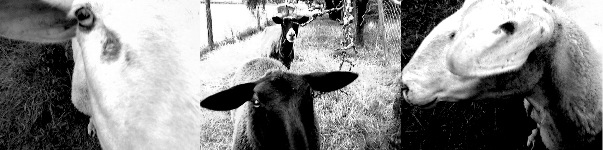
I also managed to spend time in Weener with Matthias, Ellen and Luca. They have settled in fabulously well at their new house by the port, surrounded by boats, sheep and assorted tourists. This summer they were inundated with visitors taking the opportunity to see the sea (or at least the Elbe) and take in the clean North Sea air.

sheepcomposite1-2005-08-18-10-46.jpg

sheepcomposite-2005-08-18-10-46.jpg

06 March 2005

Sharjah Wildlfe Centre

Mercifully easy to find (if you know how scary it is to drive in Sharjah, where there is no roadmap in existence), after a detour through the vastness of Sharjah University, past the impressively pointless Sharjah monument, we reached this new zoo for a rainy day visit.

I have never been in a zoo that was emptier. Apart from a bus load of Dutch people there was not a screaming child of a whinging teenager in sight (not that the Dutch people screamed or whinged, all very civilised). Most of the time it was just us and the various snakes, spiders, scorpions, gekkos and lizards. Until we got to the outside habitats: Flamingos and other water birds balancing on one leg; Ostriches and antelopes of varying sizes strolled round together and in the distance we could even spot a few of the fabled oryx antelopes, extinct in the wild now, who were a source for the myth of the unicorn, since their straight long, closely set horns look like a single on from the side.

We also spotted a rock hyrax, a small ratty looking thing, but which apparently is a distant relative of the elephant (it would be difficult to think of the shape of a land mammal that looked less like an elephant than this cat-sized furry animal).

Another highlight was a cave full of fruit bats at lunch, eating melons and apples, flying up and down a dark alley, avoiding each other by prodigious use of ears and radar. Finally we arrived at the dangerous animals section: red-arsed baboons nervously eyeing the wolves in the next enclosure, a mean hyena pacing in circles and graceful leopards and cheetahs staring bored into the distance. Perhaps they would have been cheered up by the sight of screaming children....

IMG_4620-2005-03-6-10-46.jpg

Martina Has a Cheetah Encounter

27 February 2005

Green Desert

Trips to Fossil Rock and Hatta Pools have become regular weekend features for us. But this week the desert was a quite different sight.

We have had a lot of rain this winter, much more than last year. Since Mark and Martina arrived it has rained three times, and when Naime and Thomas were here we faced the embarrassment of having to lend them jumpers since we had told them it was going to be warm and then turned out to be quite chilly.

As an introduction to the local countryside we took Mark and Martina to Fossil Rock, a short drive through the dunes from Al-Awir towards the mountains. But where normally there are just a few grey scrubs and some dead-looking branches sticking out of the ground this time the sand was covered in clumps of sharp green grasses, faint meadows of white and yellow flowers and bushes with red blooms. The camels were having a field day.

DSCF3719-2005-02-27-10-46.jpg

It was amazing to see how plants can grow in the fine sand as soon as there is some water. The leeside of dunes, where the shade keeps the rain water on the surface, were coloured a delicate pale green with soft growth. Digging just a few inches revealed the sand to be damp, soaked full with moisture.

DSCF3801-2005-02-27-10-46.jpg

DSCF3787-2005-02-27-10-46.jpg

DSCF3776-2005-02-27-10-46.jpg

Flowers in the Desert

Hatta, normally a forbidding reddish-grey mountain range, had taken on a faint blue-green shimmer in the crags and crevasses where the water collected. The normally rare pools on the wadi floor had spread, so that there were rivulets of water in most places, supporting frogs, dragon flies, spiders and fish in an inhospitable climate.

IMG_4500-2005-02-27-10-46.jpg

PICT3838_1-2005-02-27-10-46.jpg

PICT3866_1-2005-02-27-10-46.jpg

Desert Dwellers (frog and dragonfly © Mark Locker 2005)